

My nearly 18-year career has centered on neurological rehabilitation across the lifespan; specifically children, adolescents, and young adults who have had both congenital and acquired neurological deficits and disorders (stroke, brain injury, neurocognitive disorders, genetic disorders etc.). I have been a certified brain injury specialist since 2016. One of the things that I noticed when working with pediatric patients is that collaboration between team members led to progress and improved function in children. However, I also noticed that collaboration was inconsistent.
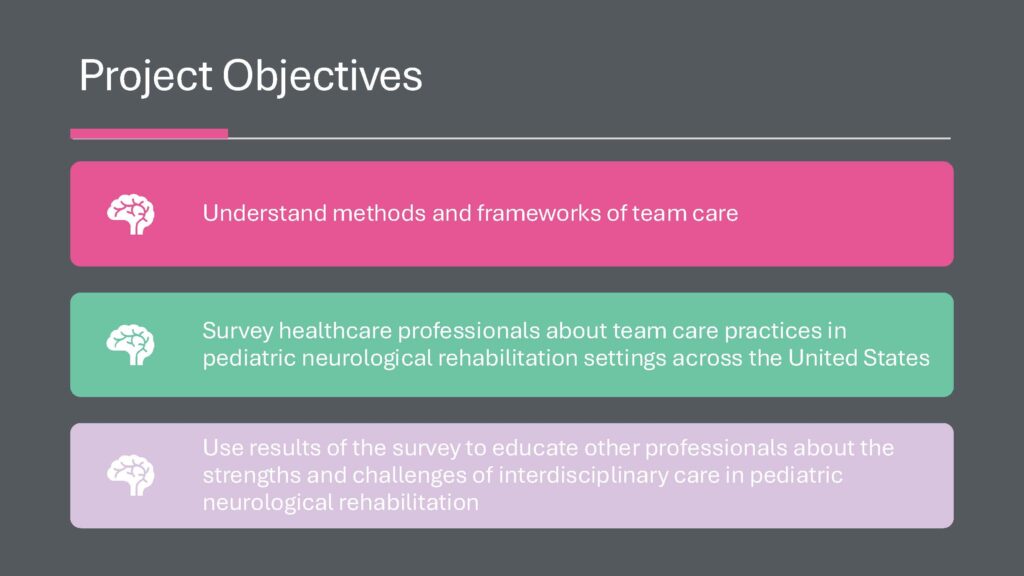
Through the coursework (outlined and discussed in the Clinical Doctorate page) I developed a better understanding of the broader view of neurological rehabilitation. Learning about the teamwork components of neurorehab led me to want to know more about the various aspects of collaborative care.
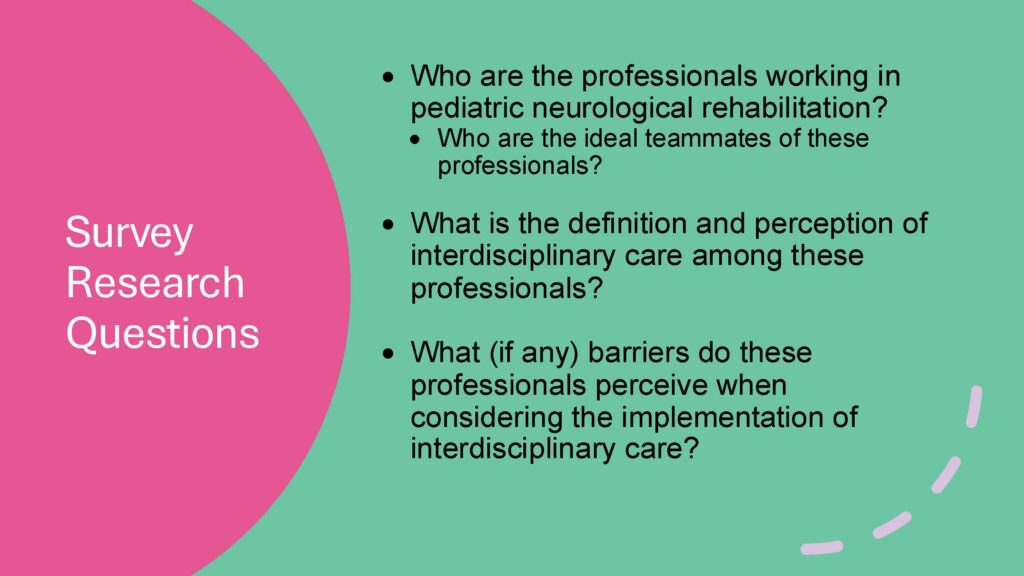
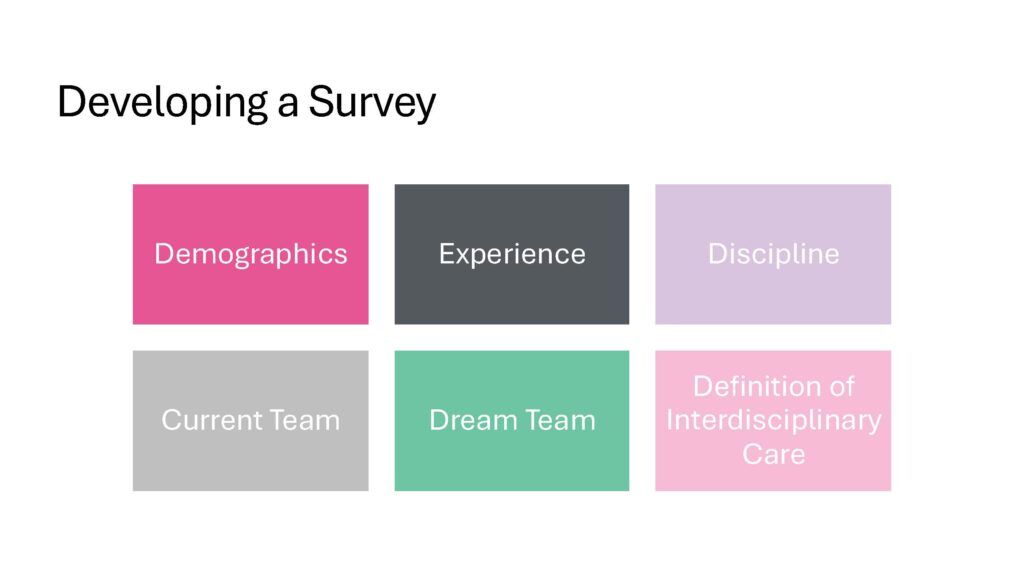
One of the hardest things to find during research was a consistent defnition of interdisciplinary care. Some articles would cite interdisciplinary practice, but instead demonstrated characteristics of multidisciplinary care. Likewise, multidisciplinary care would be used to describe the gamut of intervention. Across disciplines, countries, researchers and clinicians, there was not one solid definition of interdisciplinary care. In considering a survey, I knew what I would want to ask.
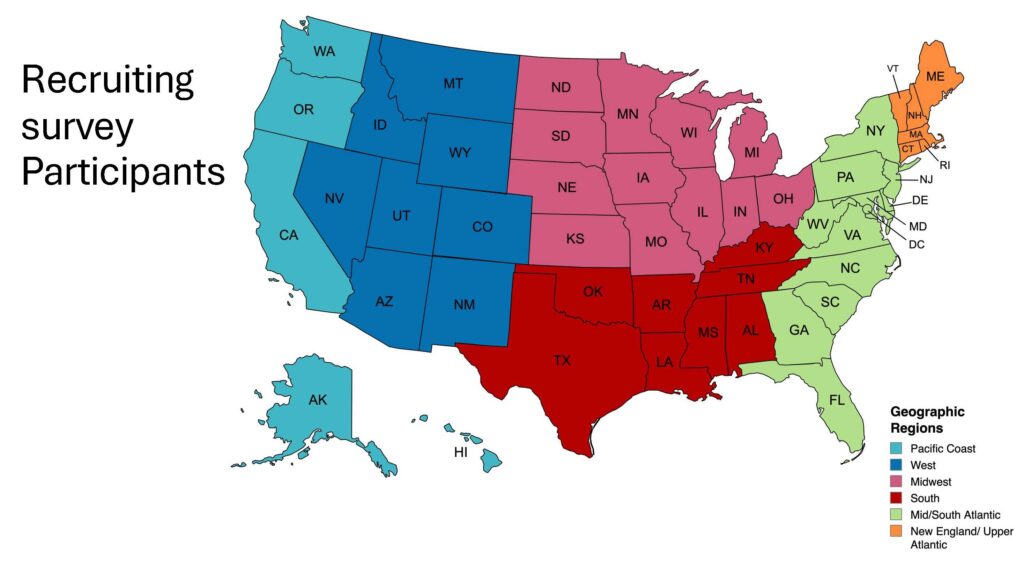
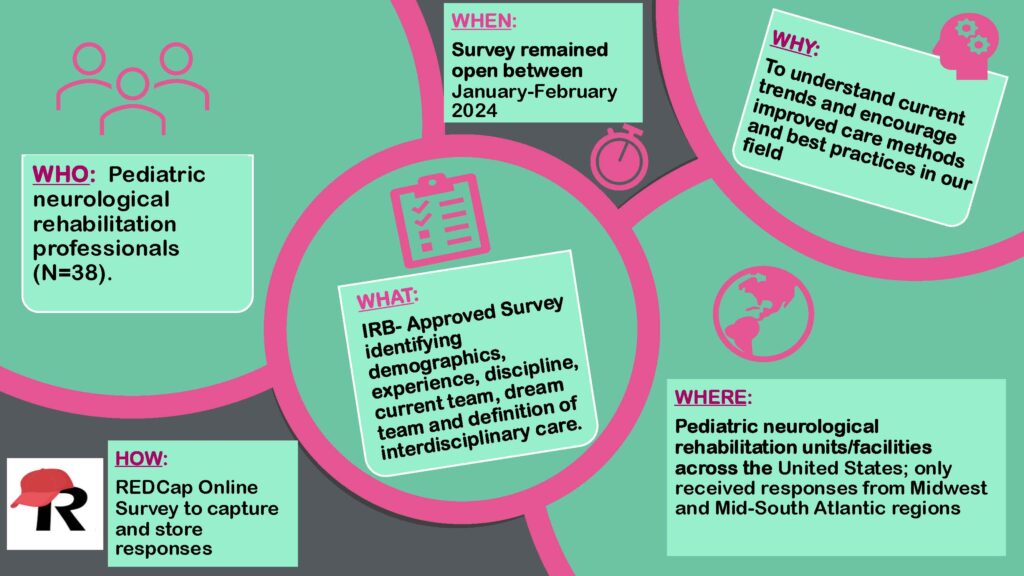
I knew that it would be important to identify the team members taking the survey, where they were located (within the United States), and what they were doing in this realm of care.
So I divided a map into regions...
And did the most Speech-Language Pathologist thing ever...
A synapse is the moment in the brain where two neurons connect and pass messages to each other. We create these as we learn and grow throughout our lifetimes. These synapses create the thoughts, the movements, and actions that we need to complete basic life functions.