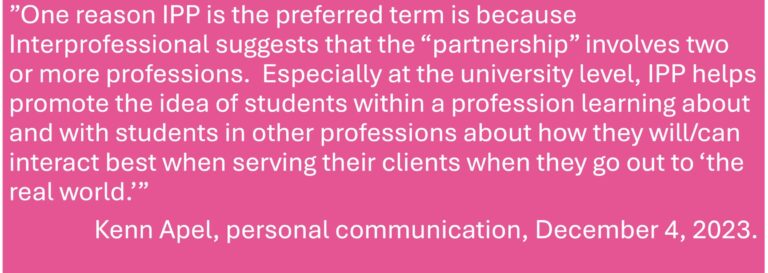


In a quest to further understand this title for care, I contacted one of the authors of the American Speech-Language Hearing Association (ASHA) IPP/IPE manual. Dr. Kenn Apel, Distinguished Professor Emeritus at the University of South Carolina and Recipient of ASHA Honors Award, explained to me in further email correspondence that IPP is the preferred term because of the implications behind the word interprofessional. Interprofessional identifies partnering as opposed to just bringing your skills to the table.
In researching team frameworks, I
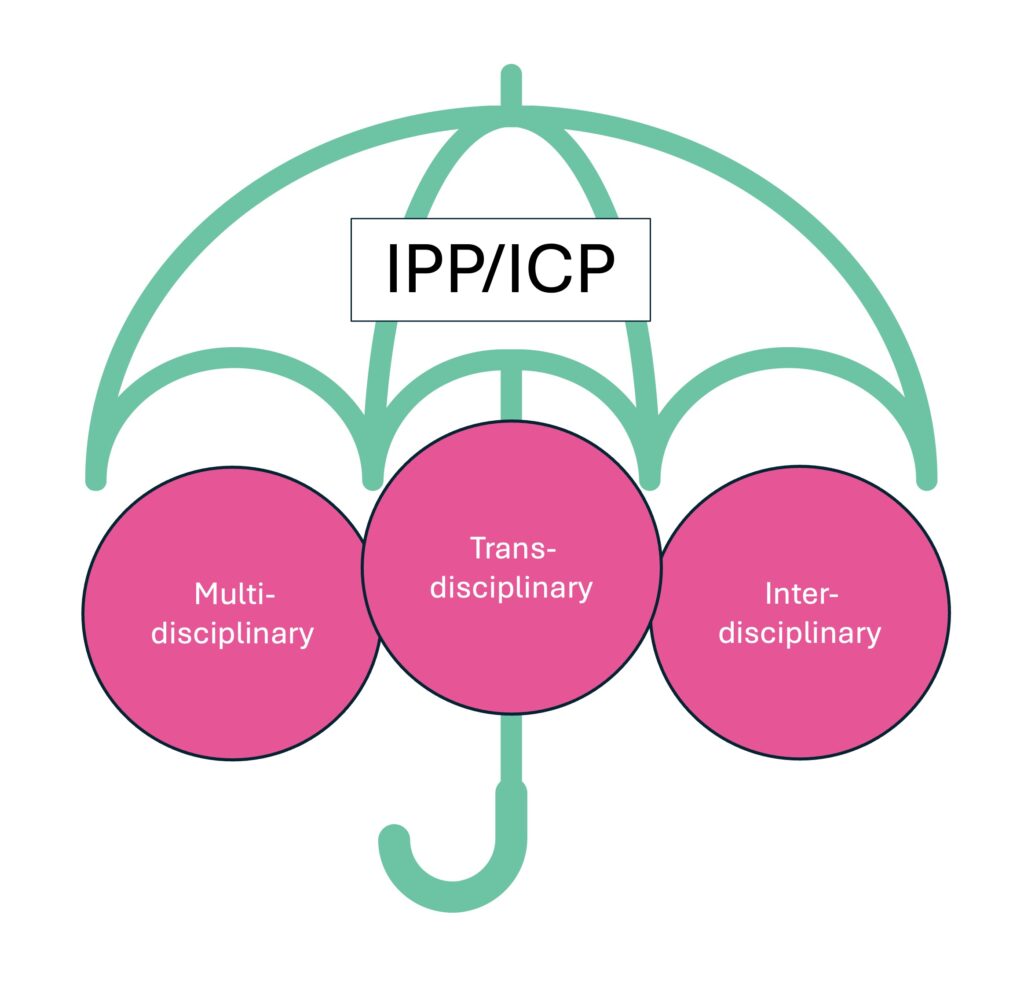
found that there are three major types of care
involved:
-
Multidisciplinary care: developed in the 1940’s as a result of soldiers coming home from war with pretty extensive needs.
-
Transdisciplinary care: introduced in the 1970’s, aimed to improve all aspects of living with disorder/disability.
-
Interdisciplinary care: started growing in popularity in the 1990’s.
It is important to note that the newest terminology in care is Interprofessional Collaborative Practice (ICP) or Interprofessional Practice (IPP). They mean the same thing.
“The IPP framework helps professionals learn about, from, and with colleagues from different specialties. On successful IPP teams, each member provides their professional expertise and works together on an assessment and treatment plan that centers around the person and their family. Teams collaborate on planning and developing solutions, taking into account each member’s perspective.” (ASHA website, 2024)
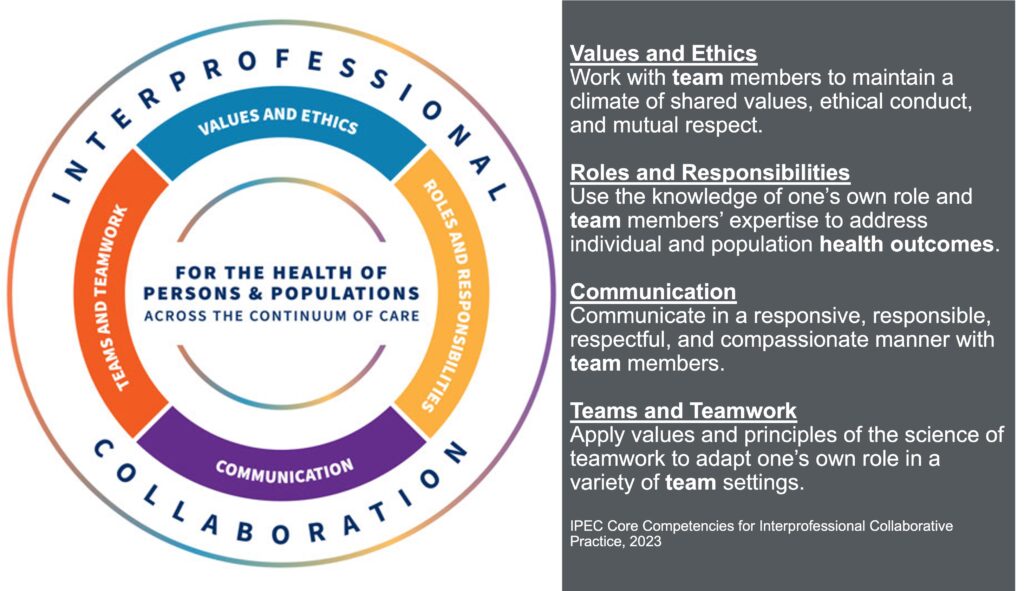
This information is from the most updated manual for interprofessional collaborative practice by the Interprofessional Education Collaborative also known as (IPEC). These are the core competencies for interprofessional collaborative practice as of November 2023. These competencies: Values and ethics, roles and responsibilities, communication and teams and teamwork, are the commonality that is required of all team care. multidisciplinary, transdisciplinary and interdisciplinary care models all have these competencies in one way or another as a part of their care model.
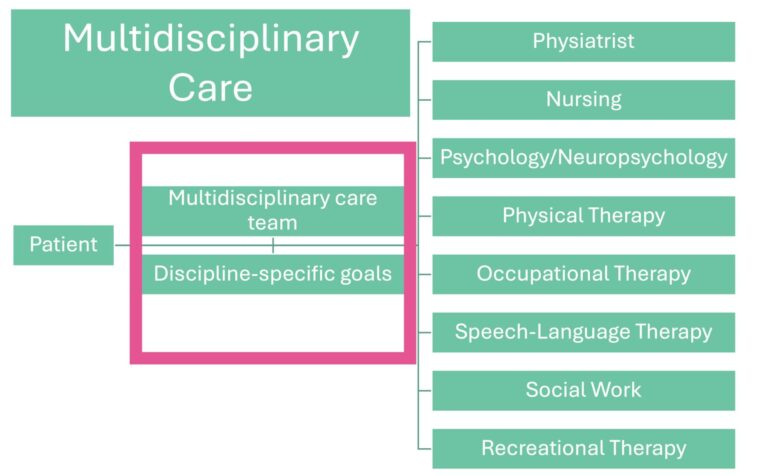
Multidisciplinary care is more of a traditional medical model of care: You have the patient at the start of care, the team assesses the patient and makes discipline-specific goals and the team works to meet their goals.
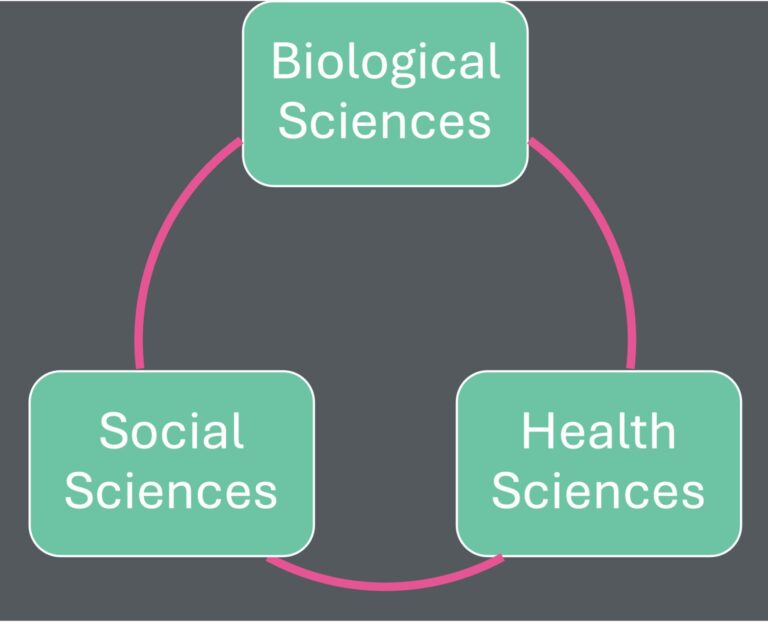
In transdisciplinary care, the person is at the center of care and health sciences is just one component of overall care: there is also social sciences and biological sciences working to meet the needs of the person
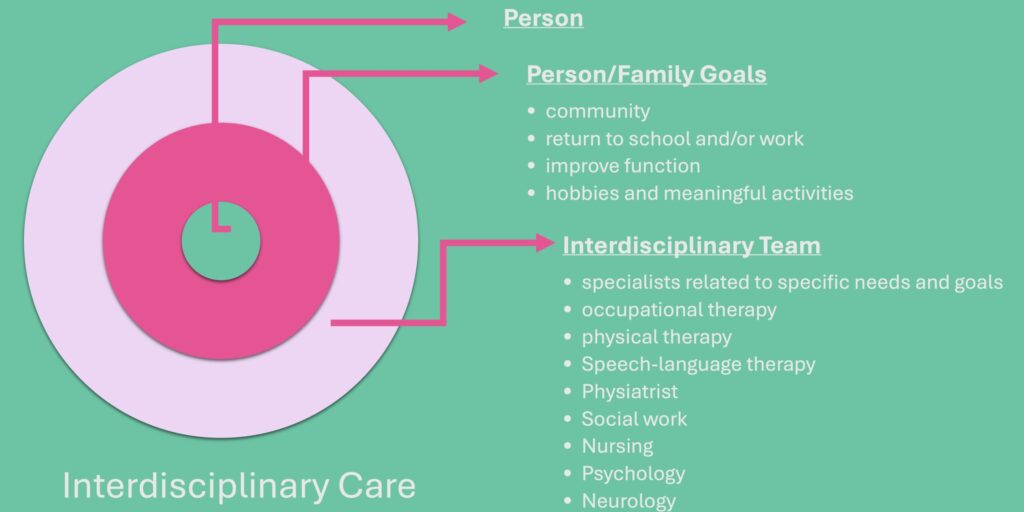
In an interdisciplinary care team, the person is at the center of care, their goals for improving quality of life are their focus, and the team is the supporting component working to help the person achieve the goals. interdisciplinary is more interwoven than multidisciplinary care and does not veer outside the realm of health sciences like in transdisciplinary care.
A synapse is the moment in the brain where two neurons connect and pass messages to each other. We create these as we learn and grow throughout our lifetimes. These synapses create the thoughts, the movements, and actions that we need to complete basic life functions.